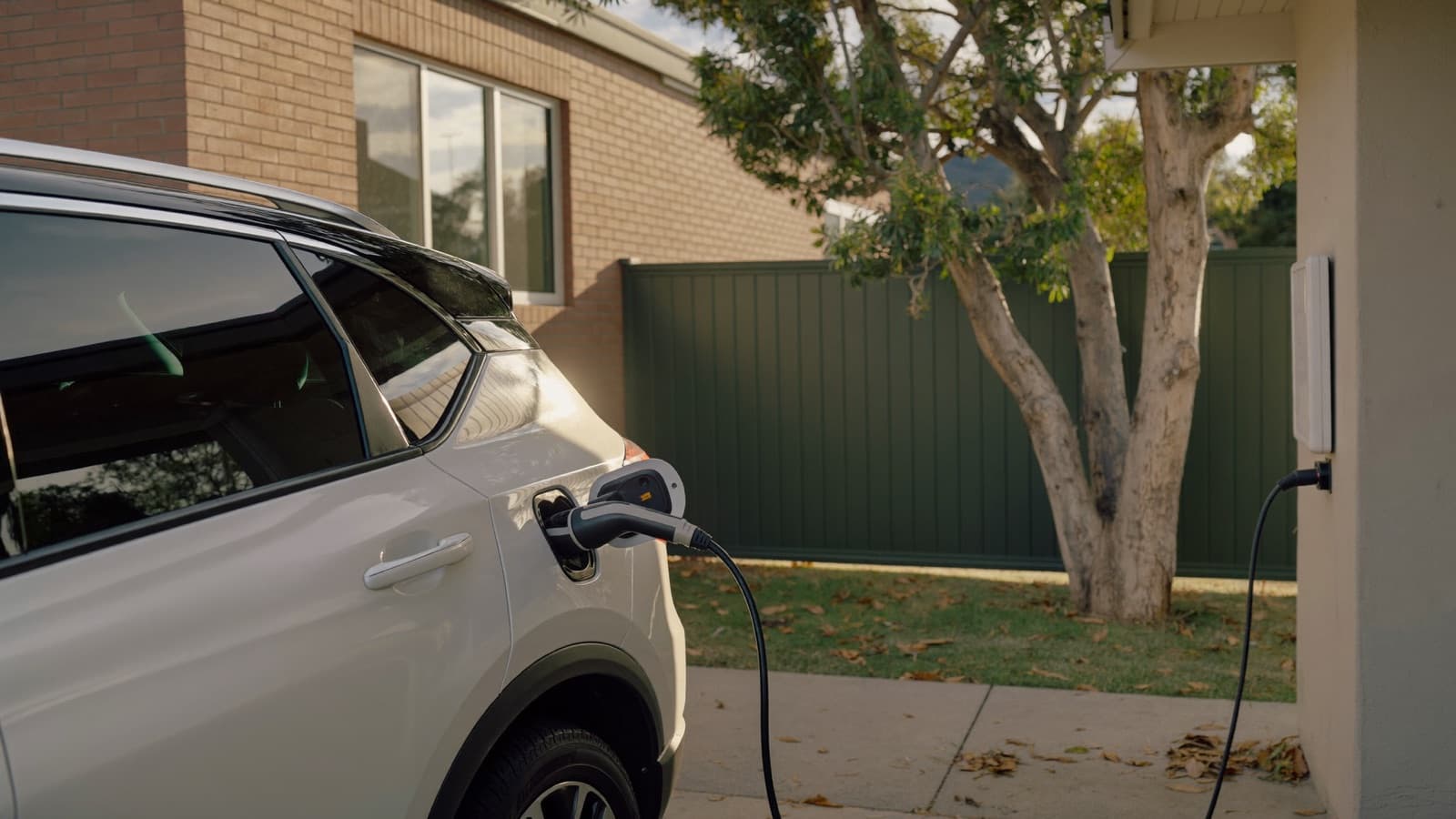
The FBT exemption on electric cars now has an end date in draft legislation. Treasury opened consultation on 10 September on the Treasury Laws Amendment Bill 2026: Phased Changes to the FBT Electric Car Exemption, which turns the government's 5 May announcement into law. A battery electric car provided under a commitment made before 1 April 2027 keeps the full exemption for as long as that commitment runs. After that date the concession narrows in two steps, and from 1 April 2029 the concession becomes a permanent 25 per cent discount. The government puts the saving to the Budget at $1.7 billion over five years.
Two warnings before the detail. First, this is an exposure draft. Submissions closed today, 28 September, and the bill still has to be introduced and passed by both houses. The wording can change, and until it passes, today's exemption is the law. Second, the date most people are fixated on, 1 April 2027, is not the one that matters for most buyers. If your EV costs $75,000 or less, the draft keeps the full concession for commitments made up to 31 March 2029.
What the draft actually says
- Commitments made before 1 April 2027: the current exemption continues until that commitment ends. Nothing changes for leases already running.
- Commitments made from 1 April 2027 to 31 March 2029: a 100 per cent discount, which works out the same as the exemption, if the car's base value is $75,000 or less. Above $75,000 and up to the fuel-efficient car limit ($91,661 for 2026-27, per Treasury's explanatory materials), a 25 per cent discount.
- Commitments made from 1 April 2029: a 25 per cent discount only, for cars up to the fuel-efficient car limit. Above the limit there is no concession, as now.
The 25 per cent discount works through the statutory formula. The fraction applied to the car's base value falls from 20 per cent to 15 per cent, so a $60,000 car carries a taxable value of $9,000 a year instead of $12,000. The operating cost method is not changed. The $75,000 figure is written into the draft bill as a flat amount with no indexation, and it is tested against the car's base value when your employer first holds it. For a novated lease that is broadly the GST-inclusive purchase price plus any accessories fitted at or around purchase, excluding registration and stamp duty. A dealer-fitted tow bar or window tint counts.
Plug-in hybrids are not part of this. They lost the exemption from 1 April 2025 unless the car was already in exempt use under a financially binding commitment made before then, and the draft's definition of an eligible car covers only battery electric and hydrogen fuel cell vehicles. The draft also keeps the existing rule that the benefit shows on your income statement as a reportable fringe benefit worked out as if no concession applied, which can affect HELP repayments, the Medicare levy surcharge and some government payments.
What counts as committed
This is where the money is, and the draft leaves it to an old definition. "Commitment" is not defined in the FBT Act. Treasury's explanatory materials borrow a 2011 explanation: a commitment exists once the transaction cannot be backed out of, and it must be financially binding on at least one party. A quote, an online configuration or a refundable deposit is unlikely to meet that test. For a novated lease, the signed finance contract and the novation agreement with your employer are the documents that will matter.
The bill looks at the last time anyone committed to the car being available. That means later changes can reset the clock. Treasury lists refinancing, changing the lease term or residual, adding accessories that increase the lease payments, and changing employers, even within the same corporate group, as new commitments. Leave your job mid-lease after 1 April 2027 and the car moves onto whatever rules apply on the day you recommit. Ending a lease early just to re-sign before a deadline may be caught by the anti-avoidance rules.
One more caution. When plug-in hybrids lost the exemption, the ATO required the car to be in use or available before 1 April 2025, and said it had no discretion to extend the date for delivery delays. The EV draft tests when the commitment was made, not when the car arrives. That is the kind of detail that can tighten between a draft and a final bill, so if you are cutting it fine, aim to have the car signed for and delivered before 1 April 2027.
The numbers: a $60,000 EV
Take an EV with a $60,000 base value on a five-year novated lease, for an employee on $120,000 with a 32 per cent marginal rate including the Medicare levy. Assume the lease finances the GST-exclusive price of $54,545 at an illustrative 8 per cent with the 28.13 per cent five-year residual, which is about $897 a month or $10,766 a year, plus $4,000 a year of packaged running costs. That is a package of about $14,766 a year. We ignore GST savings and provider fees, which move both cases the same way. These figures are illustrative, not a quote.
Under the full exemption, the whole $14,766 comes out of pre-tax pay, cutting income tax by about $4,725 a year. Under the 25 per cent discount, the car has a $9,000 taxable value, so the usual approach is to pay $9,000 of the package from after-tax pay to wipe out the FBT. Only $5,766 stays pre-tax and the tax saving falls to about $1,845. The difference is $2,880 a year, or $14,400 over the lease. On $150,000 (39 per cent marginal) it is $3,510 a year, or $17,550 over five years.
The 25 per cent discount does not kill the novated EV lease. It takes about 60 per cent of the tax saving away, which leaves far less room for fees and a marked-up car price.
For a $60,000 car, though, the draft does not bite until commitments made from 1 April 2029. The pressure in the next six months is on dearer cars. Take an $80,000 EV for someone in the 39 per cent bracket. Committed before 1 April 2027, it is exempt for the life of the lease. Committed a day later, it has a $12,000 taxable value and costs about $4,680 a year more, or $23,400 over five years. The cliff at $75,000 is sharp: a car at exactly $75,000 attracts nothing, while one at $75,001 carries an $11,250 taxable value, about $4,388 a year at 39 per cent. The draft does not index the $75,000, so the accessories list at delivery can decide which side you land on.
Is the rush already on?
Battery EVs outsold petrol cars in August for the first time. Across the full market of 108,760 sales including Tesla and Polestar, EVs took 24.9 per cent, about 27,100 cars, up around 170 per cent on August 2025, against 25,824 petrol cars. The Tesla Model Y was the top seller with 6,414. Neither the FCAI nor CarExpert puts this down to the FBT change; cheaper models from brands such as BYD and strong Tesla deliveries are doing much of the work. Our read, and it is only a read, is that some of it is buyers getting in ahead of April 2027. Expect salespeople and packaging providers to use the deadline as a closing line between now and March.
Do not let a deadline sell you a car. If the EV you want is under $75,000 and you are not planning to change jobs, the draft gives you until the end of March 2029. The deadline is real for cars priced between $75,000 and the fuel-efficient limit, and for anyone who wants the certainty of the current law rather than a draft.
What to do before you sign
- Work out which deadline is yours. Base value of $75,000 or less: the draft gives you until 31 March 2029. Between $75,000 and the fuel-efficient limit ($91,661 for 2026-27): 31 March 2027 for the full exemption. Above the fuel-efficient limit: no concession either way.
- Get the base value in writing, itemised. Ask the provider to show the GST-inclusive price and every accessory fitted at delivery, so you can see how close you are to $75,000 before anything is added.
- Get the commitment date in writing. Ask your packaging provider and employer to confirm the date the lease and novation agreement became binding, and keep signed copies. If you are close to 1 April 2027, push for delivery before then as well.
- Leave the lease alone once it is signed. Refinancing, changing the term or residual, or adding paid accessories later is treated as a new commitment. If you expect to change jobs within the lease term, factor that in, because a new employer means new rules.
- Compare it against a plain car loan. Run the novated lease calculator and the car loan calculator side by side, and ask for the provider's car price, lease rate and fees separately. As our June piece on novated lease mark-ups showed, a padded car price can quietly eat a saving that is about to get smaller.
- Watch for the bill. The final version may differ from the draft. Treat the dates as the government's stated plan, not settled law, and do not pay a premium for "beat the deadline" pricing.
Disclosure: Your Finance Guide works in conjunction with ALG Australian Lending Group (ACL 505575). Licensed brokers who meet our criteria pay Your Finance Guide a partnership fee to receive enquiries from this site. The fee is paid by the broker, not by you, and is not added to your loan. Brokers are usually also paid a commission by the lender on car loans. Several of the steps above, such as checking your paperwork with your employer's packaging provider, pay a broker nothing. The FBT changes described are from Treasury's exposure draft as released for consultation in September 2026 and the government's 5 May 2026 announcement; they are not law and may change. Sales figures are as reported on 3 September 2026. Tax and lease figures are illustrative calculations on the stated assumptions, not quotes, and figures are as at 28 September 2026. This is general information, not personal or tax advice; talk to a registered tax agent about your own situation.
- Treasury: Sustainable fringe benefits tax treatment of electric cars (consultation, 10 to 28 September 2026)
- Treasury: exposure draft explanatory materials, Phased Changes to the FBT Electric Car Exemption
- Treasury Ministers: Fairer tax treatment to encourage affordable EVs (5 May 2026)
- Accounting Times: Draft laws unveiled for EV FBT changes (17 September 2026)
- ATO: FBT on plug-in hybrid electric vehicles
- FCAI: August vehicle market remains buoyant (3 September 2026)
- CarExpert: VFACTS August 2026, EVs outsell petrol, diesel and hybrid