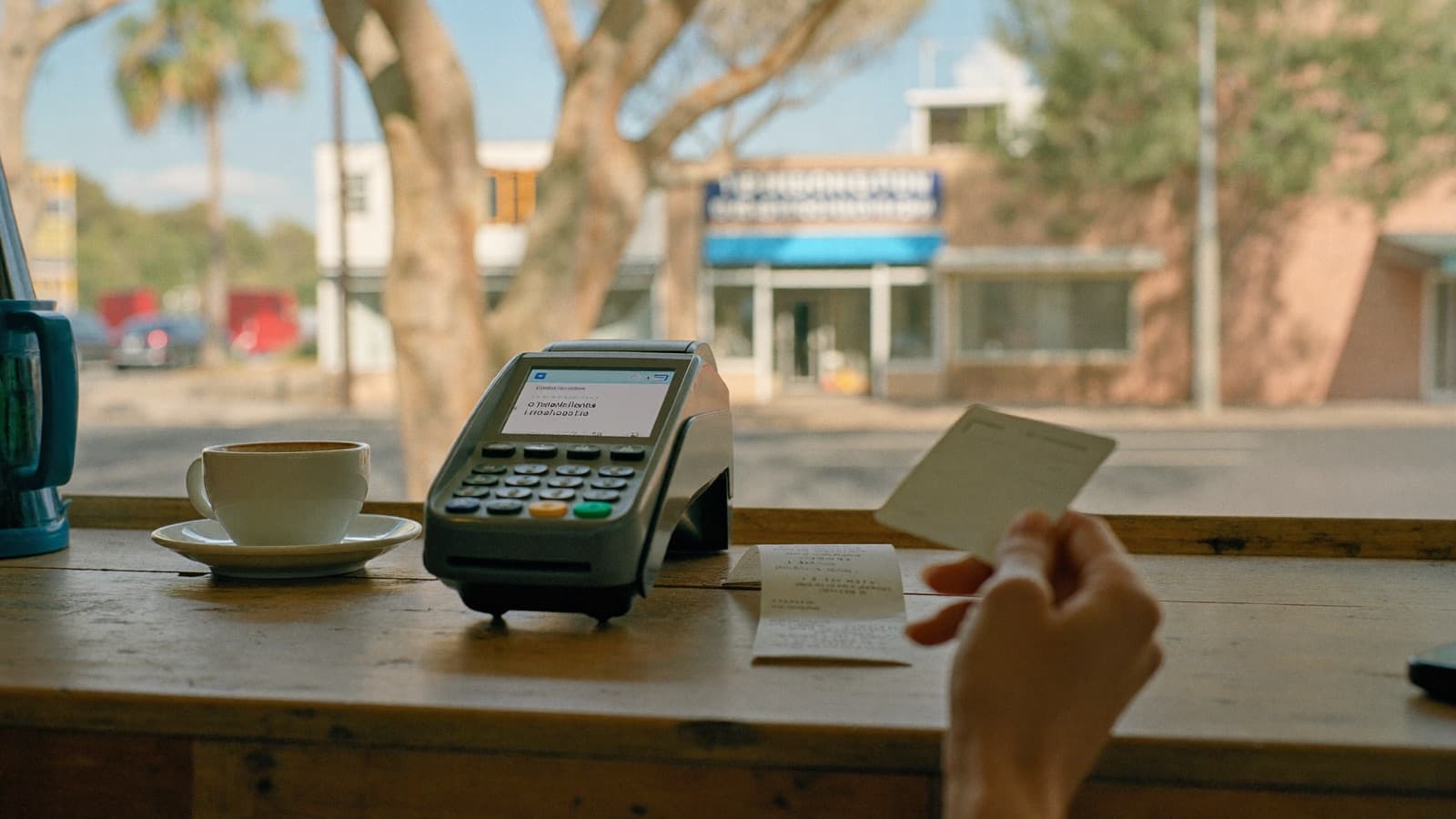
From Thursday 1 October 2026, a business can no longer add a surcharge because you paid by card on eftpos, Visa or Mastercard, whether the card is credit, debit or prepaid. American Express (credit) and UnionPay have also said they will remove surcharging from the same day, and PayPal's no-surcharge rule starts on Monday 5 October. The Reserve Bank estimates consumers pay about $1.6 billion of the $1.8 billion in card surcharges charged each year on the eftpos, Mastercard and Visa networks. On paper, that is $1.6 billion back in your pocket. In practice, it is not quite that simple, and the fine print matters.
Start with the part most coverage glosses over: this is not a law. The RBA does not regulate shops. What it did, in its Conclusions Paper of 31 March, was remove its own long-standing prohibition on card networks banning surcharges. eftpos, Mastercard and Visa then wrote no-surcharge rules into their scheme rules, and those rules reach the merchant through its contract with its bank or payment provider. The ACCC is explicit that the card networks and payment service providers enforce the rule, not the ACCC. The RBA has kept a backstop: if surcharging continues after Thursday, it says it could recommend the Government legislate a ban.
What the ban covers
- Under the RBA's rules: eftpos debit and prepaid, and Visa and Mastercard credit, debit and prepaid.
- By the networks' own commitments, not the RBA's rules: American Express credit and UnionPay from 1 October, PayPal from 5 October.
- In-store, online and in-app payments, according to the networks' own consumer FAQs published through AusPayNet.
- Cards stored in phone and watch wallets, unless a network's rules say otherwise. Tapping Apple Pay or Google Pay with a Visa card is a Visa payment.
- Overseas-issued cards used in Australia. Your Australian card used overseas falls under the rules of that country.
- Business-to-business card payments, unless a network grants an exemption. An invoice issued in September but paid by card on or after 1 October may no longer carry a surcharge either.
What it does not touch
The ban only covers surcharges added because you paid by card. Weekend and public holiday surcharges at cafes and restaurants stay legal, as do booking fees and service fees, provided they apply to every customer whatever the payment method. Taxi surcharges remain a matter for state and territory regulators. Diners Club is not on the RBA's list of networks that have announced a no-surcharge rule. Buy now pay later is outside this reform altogether: the RBA notes some BNPL providers already ban merchants from surcharging, and BNPL, mobile wallets and non-designated networks such as American Express are the subject of a separate RBA review that opened with an Issues Paper in June.
Merchants also keep three levers. They can build card costs into their prices, which the RBA anticipates the 16 per cent of merchants who currently surcharge will do. They can offer a discount for the payment method they prefer, cash included, and the RBA says that is expressly not affected. And they can stop taking cards, although some businesses are required to accept cash under the ACCC's cash acceptance codes. Neither the RBA's FAQ nor the ACCC's guidance says anything about minimum-spend signs, so we will not guess. One thing a business cannot do is blame its whole price rise on the ban if other costs went up too: the ACCC gives the example of a hair salon and says that claim would be misleading.
The part the headlines skip: your total barely moves
Read chapter 8 of the Conclusions Paper and the RBA says it plainly: consumers are already paying surcharges, so shopping at merchants that currently surcharge should not result in a material change in the total price. Some businesses may round prices up; the RBA expects that effect to be negligible. The honest win on Thursday is certainty. The price on the menu becomes the price you pay, and you no longer have to work out whether the surcharge line on the eftpos screen was legal, or excessive.
The real money is one level up, in interchange, the wholesale fee a merchant's bank pays your bank on every card payment. From Thursday the cap on consumer credit card interchange falls from 0.8 per cent to 0.3 per cent, and the 0.5 per cent weighted-average benchmark goes. Debit and prepaid caps fall from 10 cents or 0.2 per cent to 8 cents or 0.16 per cent. Commercial credit cards stay at 0.8 per cent, and a 1.0 per cent cap on overseas-issued cards follows on 1 April 2027. The RBA puts the saving to merchants at around $910 million a year and expects small businesses, which pay closest to the caps, to gain the most. Whether a given cafe sees it depends on its payment provider passing it on, which is why large acquirers must start publishing how interchange cuts flowed through to merchant fees from 30 January 2027.
Follow that money and you find who pays. The RBA estimates card issuers lose about $660 million a year in interchange, mostly on consumer credit cards, and records that issuers told it they could respond by cutting rewards points, shortening interest-free periods or raising card interest rates. The RBA's FAQ confirms a number of financial institutions have already announced changes to rewards programs and pricing. The quiet winners are debit users: the RBA says the average interchange gap between consumer debit and credit falls from about 0.4 percentage points to around 0.25, so people who pay by debit subsidise the points-earners a little less.
If your card is funded by points, the reform is aimed at you. If you pay by debit, it quietly stops charging you for someone else's frequent flyer miles.
Who is unhappy, and why
The banks. Australian Banking Association chief executive Simon Birmingham argued in March that the interchange cuts would erode banks' ability to fund payments modernisation. Visa's Alan Machet said more expensive, unregulated payment options will keep winning until regulation applies evenly across every payment method. Small business groups objected from the other side: COSBOA chair Matthew Addison warned that banning surcharges without guaranteed lower fees leaves small businesses to absorb the cost, which ends up in prices, and ACCI's Andrew McKellar made a similar point. Payment providers Tyro and Fat Zebra welcomed the change. Treasurer Jim Chalmers summed up the politics: "Australians hate paying these charges."
If you carry a card balance, the surcharge was never your real cost
The RBA's own indicator rate for a standard credit card was 20.99 per cent in August 2026. On an illustrative $5,000 balance carried all year, that is roughly $1,050 in interest at the simple annual rate, and more once it compounds. To pay the same $1,050 in surcharges at an illustrative 1.5 per cent, you would need to put about $70,000 of spending through surcharging merchants. Thursday's change is welcome, but for anyone revolving a balance it is a rounding error next to the purchase rate. A cheaper fixed-rate personal loan, a balance transfer you will actually clear, or a straight repayment plan will do more for you than any checkout reform. Our June piece on debt consolidation sets out when each of those helps and when rolling card debt into a mortgage costs more.
What to do from Thursday
- Read your receipts for the first few weeks. A line called card fee, surcharge or processing fee on an eftpos, Visa, Mastercard, American Express or UnionPay payment should not be there from 1 October, or from 5 October on PayPal.
- Ask for it back on the spot. The networks' consumer guidance says to ask the business to refund the surcharge amount. Plenty of terminals will be updated late, so start polite.
- If the business refuses, keep the receipt and note the date and amount. You can report a misleading price display to the ACCC or your state or territory consumer protection agency. Be aware the ACCC does not resolve individual complaints, and we could not find a consumer complaints channel published by the networks themselves.
- Do not argue about the Sunday surcharge. Weekend, public holiday, booking and service fees charged to everyone regardless of payment method are still allowed.
- Take the discount when it is offered. A business steering you to cash or eftpos with a lower price is doing exactly what the RBA intended.
- Open the letters from your card provider. If rewards or interest-free days are being cut, check whether the annual fee still pays for itself. For many people a no-fee debit card now does the job.
- If you carry a balance at 20 per cent or more, deal with that first. It costs you more than every surcharge you will now avoid.
Disclosure: Your Finance Guide works in conjunction with ALG Australian Lending Group (ACL 505575). Licensed brokers who meet our criteria pay Your Finance Guide a partnership fee to receive enquiries from this site. The fee is paid by the broker, not by you, and is not added to your loan. Brokers are usually also paid a commission by the lender when a loan settles. Most of the steps in this article, from asking for a surcharge refund to switching to a no-fee debit card, pay a broker precisely nothing. Surcharging and interchange details are as published by the RBA, ACCC and AusPayNet as at 28 September 2026; card network rules are business decisions and may change. The credit card rate is the RBA's indicator rate for August 2026, and the interest and surcharge figures are illustrative calculations on the stated assumptions, not quotes. This is general information, not personal advice.
- RBA: FAQs, removal of card payment surcharges from 1 October 2026
- RBA: Conclusions Paper, Executive Summary (March 2026)
- RBA: Conclusions Paper, chapter 3, Interchange Fees
- RBA: Conclusions Paper, chapter 8, Impact and Implementation
- RBA media release 2026-10 (31 March 2026)
- RBA: Issues Paper, mobile payments, non-designated card networks and BNPL (June 2026)
- ACCC: card surcharges
- AusPayNet (for eftpos, Mastercard and Visa): consumer FAQs
- RBA: Table F5, indicator lending rates
- ABC News: reactions to the RBA surcharge decision (31 March 2026)
- COSBOA: response to the surcharging decision