Guide
Best Car Loan Rates in Australia (May 2026): What Borrowers Are Actually Paying
By Daniel Wong9 min read
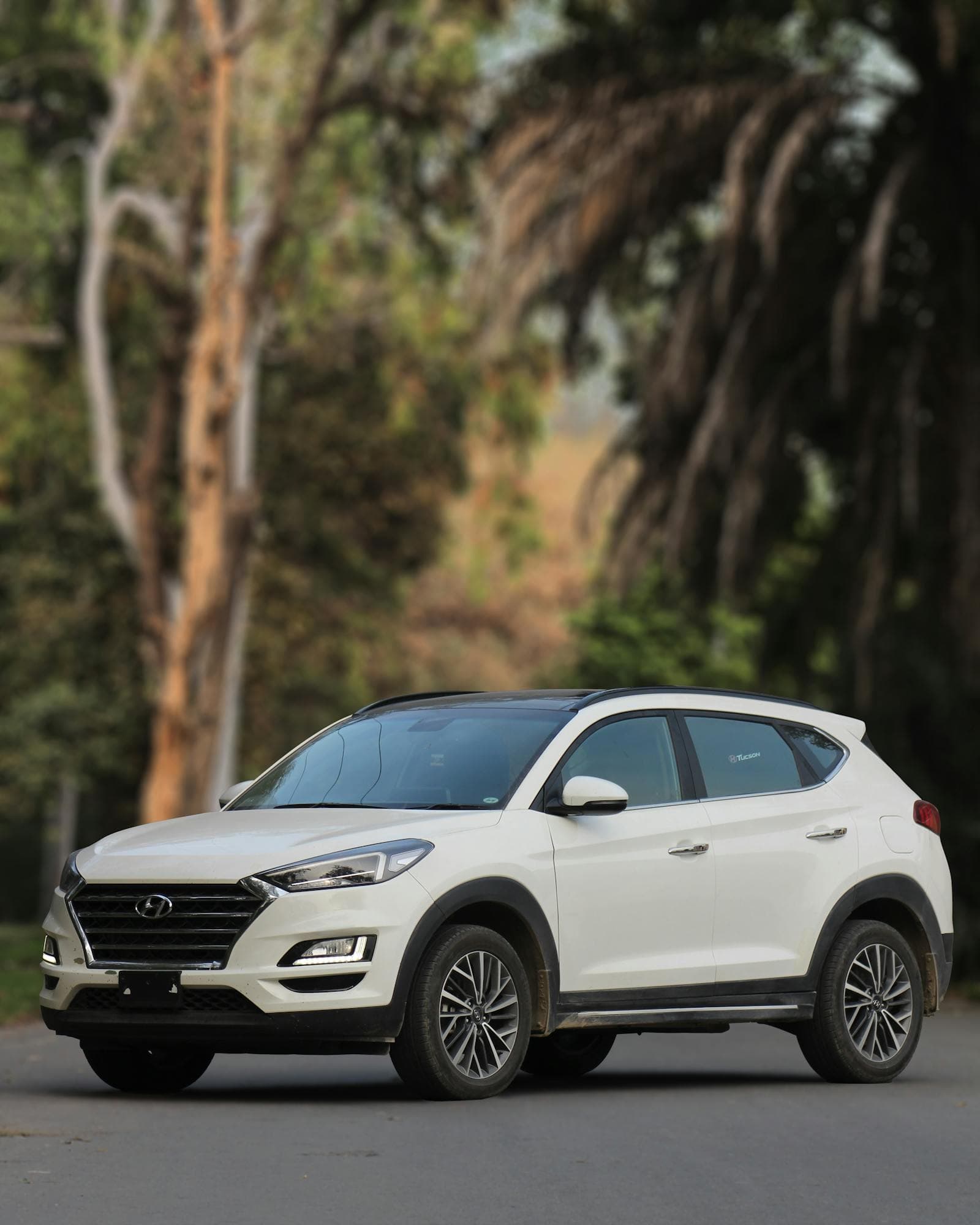
Car loan rates in Australia have moved with the cash rate, but not in lockstep. Secured car finance is priced off wholesale funding plus a credit-risk margin, and the gap between the cheapest and most expensive rates on our lender panel is wider than at any point in the last three years. In May 2026, the difference between the best and worst rate a clean-credit borrower can get on a $40,000 five-year loan is about $4,200 of interest over the term. That gap is largely a function of which lender you walk into, not your credit profile.
What rates are actually being offered in May 2026?
On our 50-plus-lender panel, secured new-car loan rates for borrowers with clean credit, 10 per cent deposit, and a vehicle under three years old are running between 6.99 and 8.99 per cent. Used-car rates are 1.0 to 2.0 per cent higher. The major-bank average is sitting at 8.79 per cent for a five-year new-car loan; the cheapest non-bank product on our panel is at 6.99 per cent. For credit-impaired borrowers (defaults inside the last two years, multiple credit enquiries, low income), rates start at around 12.99 per cent and climb to 18.99 per cent for the most stretched files. Bad-credit lending is a thin market, with fewer than ten active lenders, and the rate spread within that market is wide.Dollar maths: how much does the rate actually matter?
- $30,000 loan, 5 years: at 6.99 per cent the monthly repayment is $594, total interest $5,640. At 8.99 per cent: $623 a month, $7,360 of interest. Difference over the loan: $1,720.
- $50,000 loan, 5 years: at 6.99 per cent: $990 a month, $9,400 of interest. At 8.99 per cent: $1,038 a month, $12,270 of interest. Difference: $2,870.
- $80,000 loan, 5 years: at 6.99 per cent: $1,584 a month, $15,040 of interest. At 8.99 per cent: $1,661 a month, $19,635 of interest. Difference: $4,595.
Where the cheapest rates are coming from
The cheapest rates on our panel in May 2026 are not from the big four. They are from a cohort of specialist non-bank lenders that fund through wholesale debt markets and price aggressively for clean-credit borrowers. The trade-off: tighter credit policy. These lenders will decline borderline applications that a major bank would approve at a higher rate. The two questions to ask before applying:- What is the maximum LVR (loan-to-value ratio) the lender accepts? Some non-banks cap at 90 per cent of vehicle value; banks often go to 100 per cent including on-road costs.
- What is the maximum age of the vehicle at the end of the loan term? Many non-banks require the vehicle to be under 10 years old at loan maturity, which constrains five-year loans on used cars.
EV and green car loan discounts
Six lenders on our panel maintain green car loan rates discounted 0.50 to 1.00 per cent below their standard secured rate. Eligible vehicles are typically BEVs and hybrids with emissions below a stated threshold (varies by lender, commonly 120 g/km CO2). For a $50,000 EV financed at a 6.49 per cent green rate vs a 7.49 per cent standard rate over five years, the saving is about $1,310 of interest. The biggest tax-effective structure for an EV under $91,387 is still novated lease. For a salary-packaged employee on a $100,000 salary buying a $60,000 EV, the after-tax saving over a five-year lease term can run to $15,000 to $25,000 vs a standard secured loan, driven by the FBT exemption that continues to apply to BEVs under the threshold.The seven car-loan negotiation levers most borrowers miss
- Get pre-approval before the dealer. Pre-approval gives you a confirmed budget and rate. You then walk into the dealer with a financing decision already made, removing the dealer's primary lever.
- Compare comparison rates, not headline rates. The comparison rate captures most fees and gives a truer cost. A loan with a 7.49 per cent headline rate and $695 of upfront fees can be more expensive than an 8.19 per cent loan with no fees.
- Match the loan term to vehicle life. A seven-year loan on a three-year-old car will see the loan exceed the car's value (negative equity) for most of the loan term. Five years is the sweet spot for new cars; three to four years for used.
- Negotiate the rate, not just the price. A 0.25 per cent discount on a $40,000 loan is worth $510 over five years. Lenders move on rate for clean applicants more than borrowers think.
- Avoid balloon payments unless you understand them. A balloon (or residual) payment reduces the monthly repayment but creates a large lump sum at term end. If you cannot pay the balloon, you refinance or sell. Useful for business buyers managing cashflow; rarely useful for personal buyers.
- Skip the dealer's add-on insurance products. Gap insurance, consumer credit insurance, and extended warranties bought through the dealer are typically 2-3 times the price of comparable products bought independently.
- Watch the fee structure. Establishment fees of $400 to $750 are standard. Monthly fees of $10 to $15 are also standard. Early-termination fees can be $500 to $1,500 on some products. Read the disclosure.
What credit profile do you actually need for the best rates?
The cheapest rates require:- Credit score above 700 (Equifax) or above 730 (Experian)
- No defaults, court judgments or bankruptcies in the last seven years
- Stable employment, typically two-plus years in current role or industry
- Income net of expenses sufficient to cover the new loan plus a buffer
- 10 per cent deposit (some lenders accept lower with a higher rate)
How to get the best car loan rate for your situation
For broader product context and the different ways to structure vehicle finance in 2026, see our car loans hub; for asset-specific guides, the vehicle finance hub covers make- and model-specific finance. Run your numbers through our car loan calculator to see the dollar impact of different rates and terms. If the budget works at the higher end of the range, you have flexibility; if it only works at the cheapest rate, the application needs to be sharp on every dimension (credit, deposit, vehicle, income). The single most reliable way to get the cheapest rate is to apply through a broker that has access to the non-bank lenders that price aggressively. Single-lender applications give you one quote; broker applications give you five to eight, with the broker filtering for your specific scenario. If you ask for a broker, we pass your enquiry to a licensed broker who meets our criteria. Your Finance Guide works in conjunction with ALG Australian Lending Group (ACL 505575). The quote conversation is free and there is no obligation to proceed.Share this article:
DW
Daniel Wong
Senior Writer, Vehicle & Equipment Finance
Daniel covers vehicle and equipment finance, chattel mortgage, novated lease, asset structures, and instant asset write-off.
Read full profilecar loan ratescar loansEV financepre approvalcomparison rategreen car loans
Keep reading across the site
WARNING: This comparison rate is true only for the example given and may not include all fees and charges. Different terms, fees, or other loan amounts might result in a different comparison rate. Comparison rates are calculated on a secured loan of $150,000 over 25 years for home loans, a loan of $30,000 over 5 years for car and personal loans, and $50,000 over 5 years for equipment finance, unless the lender states another basis.